The Stones in the Tribune Tower: A Free History Lesson on Michigan Avenue
Over a hundred fragments from places like the Taj Mahal and the Colosseum sit in Tribune Tower’s walls, and kids can find them for free.
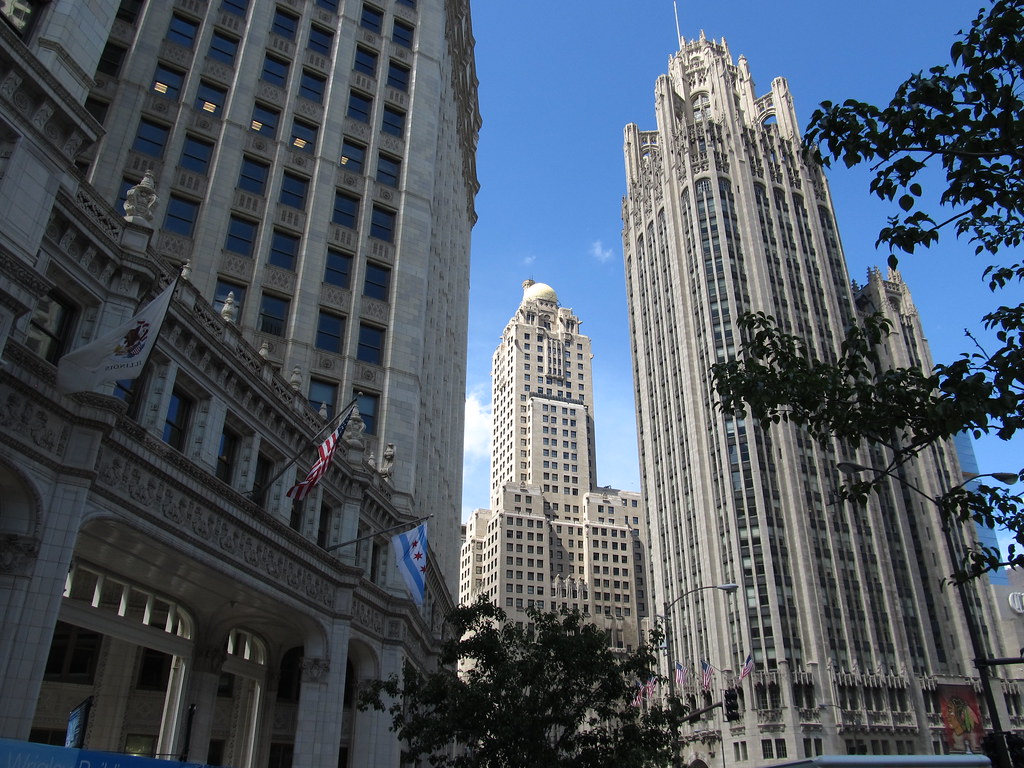
Photo: Ken Lund / Flickr, CC BY-SA 2.0
Walk past Tribune Tower on North Michigan Avenue and you could easily miss the best thing about it. Set into the walls at street level are well over a hundred fragments of stone and other materials from famous places around the world, each labeled with where it came from. It costs nothing to look, it takes as long as your kids’ attention spans allow, and it works in any season.
What the stones are
Tribune Tower was finished in 1925 as the headquarters of the Chicago Tribune. Even before it was built, the paper’s correspondents had started bringing back pieces of historic buildings and sites from their travels, and those pieces were set into the facade. The collection kept growing over the decades.
Counts vary depending on the source, from around 120 to nearly 150. Among the pieces commonly cited are fragments from the Taj Mahal, the Colosseum in Rome and the Church of the Nativity in Bethlehem, plus a piece of steel recovered from the World Trade Center. Each one has a small inscription naming its origin.
How the pieces were collected is part of the story, too. Some were gifts or official donations. Others were acquired in ways that would not fly today. That makes a decent conversation starter with older kids about what it means to take a piece of a place home.

Are they still there?
Yes. The building was converted into condominiums, completed around 2021 as Tribune Tower Residences. Tribune Tower has landmark protection that covers most of its exterior and the historic Michigan Avenue lobby, and the developers said the stones would stay. Reports after construction ended confirmed the fragments were still intact on the facade.
The stones are on the outside of the building, so you can see them from the sidewalk without going in. The historic lobby, known for the quotations about free speech and a free press carved into its walls, was preserved as part of the conversion. Reporting at the time said it remained open to the public, separate from the private residential lobby. Access policies for a private residential building can change, so treat the lobby as a bonus rather than the main event.
How to make it work with kids
The stones are at kid height, which is half the appeal. A few ways to turn a sidewalk stop into something more:
- Make it a hunt. Before you go, pick five or six places your kids have heard of and see if they can find them. A continent each works well for mixed ages.
- Bring a phone map. When they find a stone, pull up where that place is. Seeing a Chicago sidewalk connected to a dot in India or Italy lands better than any lecture.
- Touch carefully. Some pieces are worn smooth by decades of hands. Let them notice the difference between materials: marble, brick, rough rock.
- Look up, too. The top of the tower is a Gothic crown with flying buttresses, the result of a famous 1922 design competition. From the plaza, younger kids can find carved figures and details that look straight out of a castle.
Expect 20 to 40 minutes, depending on how competitive the hunt gets.
Combining it with the rest of the area
Tribune Tower sits at the north end of the Michigan Avenue Bridge, so it fits easily into a walk along the river or up the Magnificent Mile. Across the street is the Wrigley Building, the white terra cotta tower that glows at night. Just south, the Riverwalk runs along the main branch of the Chicago River with places to sit, and the bridge itself has a small museum in the bridgehouse during warmer months. Check hours before you plan around it.
If you have small children, the area can be crowded on weekend afternoons, especially in summer and around the holidays. Weekday mornings are calmer and make it easier to stop and read the inscriptions without a stream of shoppers behind you.
A few practical notes
- Getting there: Several CTA buses run along Michigan Avenue, and the Red Line’s Grand stop is a short walk west. Parking nearby is expensive, so transit is the simpler choice.
- Strollers: The sidewalks are wide and the stones are at ground and eye level, so strollers are fine.
- Weather: There is no shelter while you look, but it is a short stop. In winter, pair it with an indoor destination nearby.
- Cost: Free. The stones are part of the public face of the building.
Our springtime Chicago bucket list has more ideas that pair well with a downtown walk. And if the stones spark questions, most branches of the Chicago Public Library can point you to children’s books about the places your kids found, which is a nice way to stretch a 30-minute stop into a week of follow-up reading.